
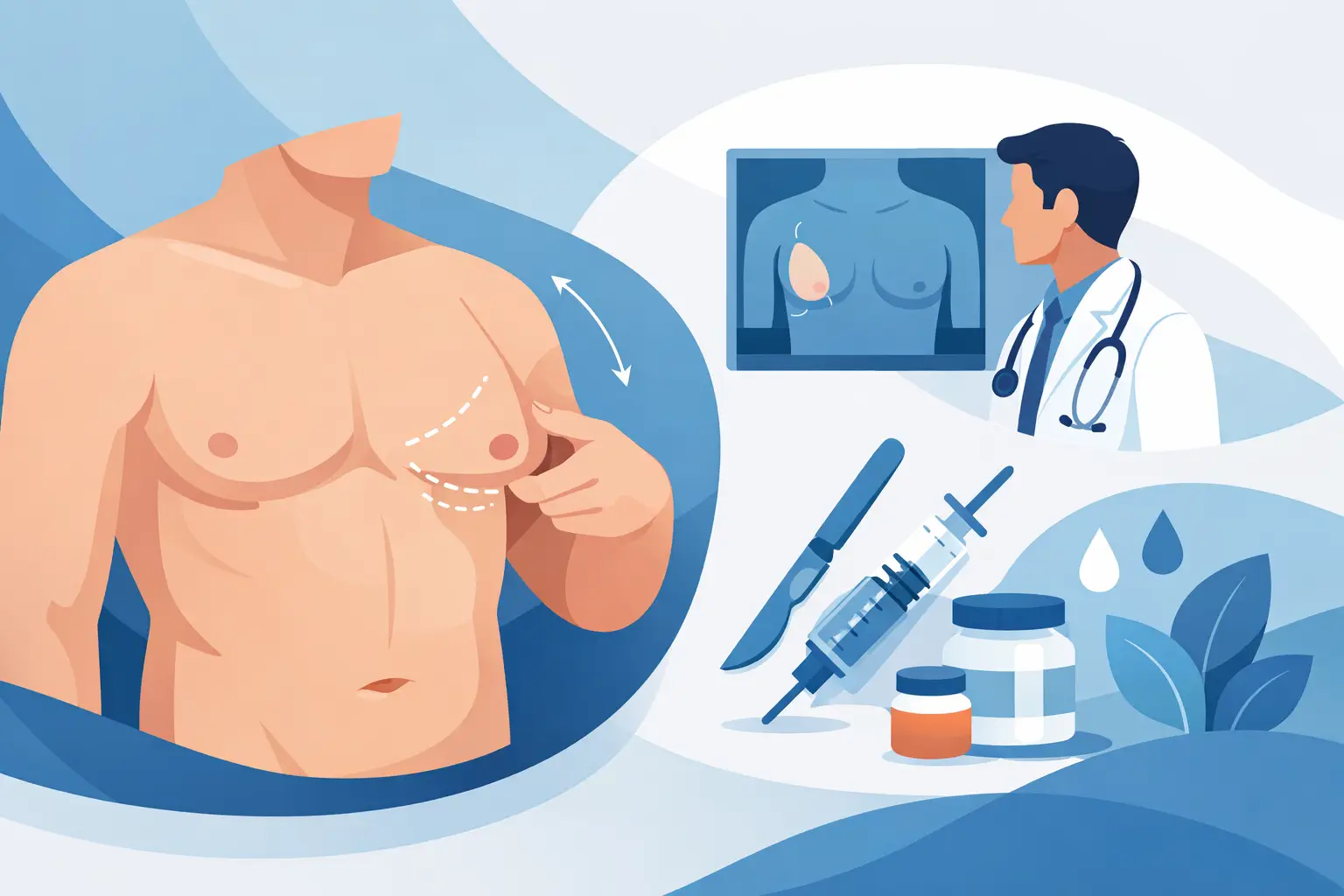
A shirt can fit everywhere else and still feel wrong across the chest. For men dealing with enlarged breast tissue, that frustration tends to show up at the gym, at the pool, in photos, and in everyday clothes. This male gynecomastia treatment guide is built to answer the real question most patients ask after years of hiding the issue: what actually works, and what gives you the best chance at a flatter, more masculine chest?
Gynecomastia is common, but that does not make it less personal. Some men have had it since their teens. Others notice it after weight changes, hormone shifts, certain medications, or aging. In many cases, diet and exercise improve overall body fat but do not fully correct the chest because the problem is not always just fat. It can be glandular tissue, loose skin, or a combination of all three. That is why the right treatment starts with getting specific.
What this male gynecomastia treatment guide should make clear
Not every full-looking male chest is true gynecomastia. Some patients mainly have excess fat in the chest area, often called pseudogynecomastia. Others have dense glandular tissue under the nipple-areola complex. Some have both, and men after major weight loss may also have stretched skin that keeps the chest from looking firm even after fat is removed.
That distinction matters because the treatment plan changes based on what is actually there. If the chest fullness is mostly fat, liposuction may do a lot of the heavy lifting. If a firm gland is present, liposuction alone may not be enough. If the skin has lost elasticity, contouring may need to be paired with skin tightening or excision to create a cleaner result.
A strong surgical plan is not about doing the most. It is about doing what the chest needs and avoiding a one-size-fits-all approach.
What causes gynecomastia
Hormones are a major factor. Gynecomastia can develop when estrogen activity is relatively higher than testosterone activity, even if lab values are not dramatically abnormal. That can happen during puberty, with aging, or as a side effect of some medications and substances.
Weight gain also plays a role, but not always in the way patients assume. Increased body fat can make the chest look fuller, and fat cells can influence hormone balance as well. Still, many fit men with low body fat have persistent chest fullness because glandular tissue does not respond the way fat does.
There are also cases where no clear cause is found. That is frustrating, but it is common. What matters most is identifying whether the condition is stable, whether there are symptoms like tenderness, and whether the concern is primarily cosmetic, medical, or both.
When surgery becomes the best option
If gynecomastia is new, painful, or changing quickly, medical evaluation comes first. But for long-standing chest fullness that has not improved with time, weight loss, or lifestyle changes, surgery is often the most effective treatment.
This is where expectations need to be honest. Exercise can strengthen the pectoral muscles, but it cannot remove glandular tissue. Fat loss can help if excess fat is the main issue, but it may also make the surrounding chest leaner while the gland becomes even more noticeable. Noninvasive treatments have limited value for true gynecomastia. If your goal is a visibly flatter chest with better contour, surgery is usually the treatment that delivers a real change.
Surgical options for male gynecomastia treatment
The most effective procedures usually fall into three categories: liposuction, gland excision, and skin tightening or skin removal. Many patients need a combination rather than a single technique.
Liposuction for chest contouring
Liposuction is often a key part of treatment because it removes excess fat and helps sculpt the outer chest for a more athletic shape. Advanced liposuction techniques can also help blend the treated area into the surrounding torso so the chest does not look flat in one spot and full in another.
This matters more than many men realize. Great gynecomastia correction is not just about taking tissue out. It is about creating a natural male chest contour from multiple angles.
Gland excision when tissue is dense
If there is firm glandular tissue beneath the nipple, excision is often necessary. This tissue can feel rubbery or dense and does not suction out as predictably as fat. When it is left behind, patients may still see puffiness or projection after liposuction.
Excision is a precision step. Remove too little, and the result can look incomplete. Remove too much, and the chest can look indented. That is why experience matters. Male chest contouring is a specialized procedure, not a generic fat-reduction case.
Skin tightening or skin removal
Some chests need more than tissue removal. If the skin has stretched from weight changes or long-term fullness, the chest may not contract enough on its own. In select patients, energy-based skin tightening can help improve contraction. In more advanced cases, skin excision may be the better option.
There is a trade-off here. More aggressive skin removal can improve contour but may mean more visible scarring. Less invasive treatment can minimize scars but may not correct laxity as fully. The right decision depends on how much loose skin is present and what kind of result the patient values most.
Who is a good candidate
The best candidates are men in generally good health who have realistic expectations and a stable concern that has not responded to conservative measures. Being near a sustainable weight helps because it gives the surgeon a clearer target and makes the result easier to maintain.
You do not need to be shredded to qualify. But if your weight is fluctuating significantly, it may make sense to stabilize first. Likewise, if you use medications, supplements, or substances that may contribute to gynecomastia, those factors should be reviewed before surgery.
A consultation should look at chest anatomy, skin quality, nipple position, tissue composition, and overall body proportions. The chest should fit the rest of your physique. That is what makes the result look believable.
Recovery and what to expect after treatment
Recovery depends on how much correction is needed. Patients treated with liposuction alone often have a quicker recovery than those who also need gland excision or skin removal. Swelling, bruising, and temporary tightness are normal early on.
Most men wear a compression garment to help control swelling and support the new contour. You can usually return to light activity fairly quickly, but intense chest workouts and heavy lifting need to wait until your surgeon clears you. Final definition takes time. The chest improves in stages as swelling resolves and tissues settle.
This is another place where patience matters. Early recovery is not the final result. A chest can look better right away and still continue refining for weeks to months.
How to choose the right provider
This male gynecomastia treatment guide would be incomplete without addressing the biggest decision in the process: who performs the procedure. Gynecomastia surgery sits at the intersection of fat removal, tissue excision, and aesthetic contouring. That combination rewards specialization.
Look for a provider with strong experience in body sculpting and male chest contouring, not someone treating it as an occasional add-on. Before-and-after results should show consistency across different body types, not just one ideal patient. You want to see smooth contours, natural nipple positioning, and a chest that matches the abdomen and flanks.
The consultation should also be specific. If a provider cannot explain whether your issue is mostly fat, gland, skin, or a combination, that is a red flag. Clear planning usually leads to cleaner outcomes.
At a specialized body contouring practice like True Contour Medical, that focused approach is the standard. The goal is not simply reduction. It is definition, proportion, and a chest that looks like it belongs on your frame.
Questions men often ask before moving forward
One of the most common questions is whether the results are permanent. Removed fat cells and excised glandular tissue do not simply grow back under normal circumstances. That said, major weight gain, hormone changes, or ongoing contributing factors can still affect the chest over time.
Another question is whether scars are visible. The answer depends on the technique. Liposuction scars are usually small. Excision scars are often placed around the areola where they can be less noticeable. More extensive skin removal creates more visible scars, which is why the plan has to balance contour improvement with scar tolerance.
Men also ask whether the result will look natural. It should, if the procedure is planned well. The best outcome is not an overcorrected chest. It is a masculine contour that looks leaner, firmer, and in proportion with the rest of the torso.
Living with gynecomastia can make men adjust how they dress, how they stand, and how much they enjoy situations that should feel easy. The right treatment can change that in a very visible way. If your chest has stayed the same despite weight loss, workouts, or waiting it out, the next smart move is a specialist consultation that treats the problem with precision instead of guesswork.