
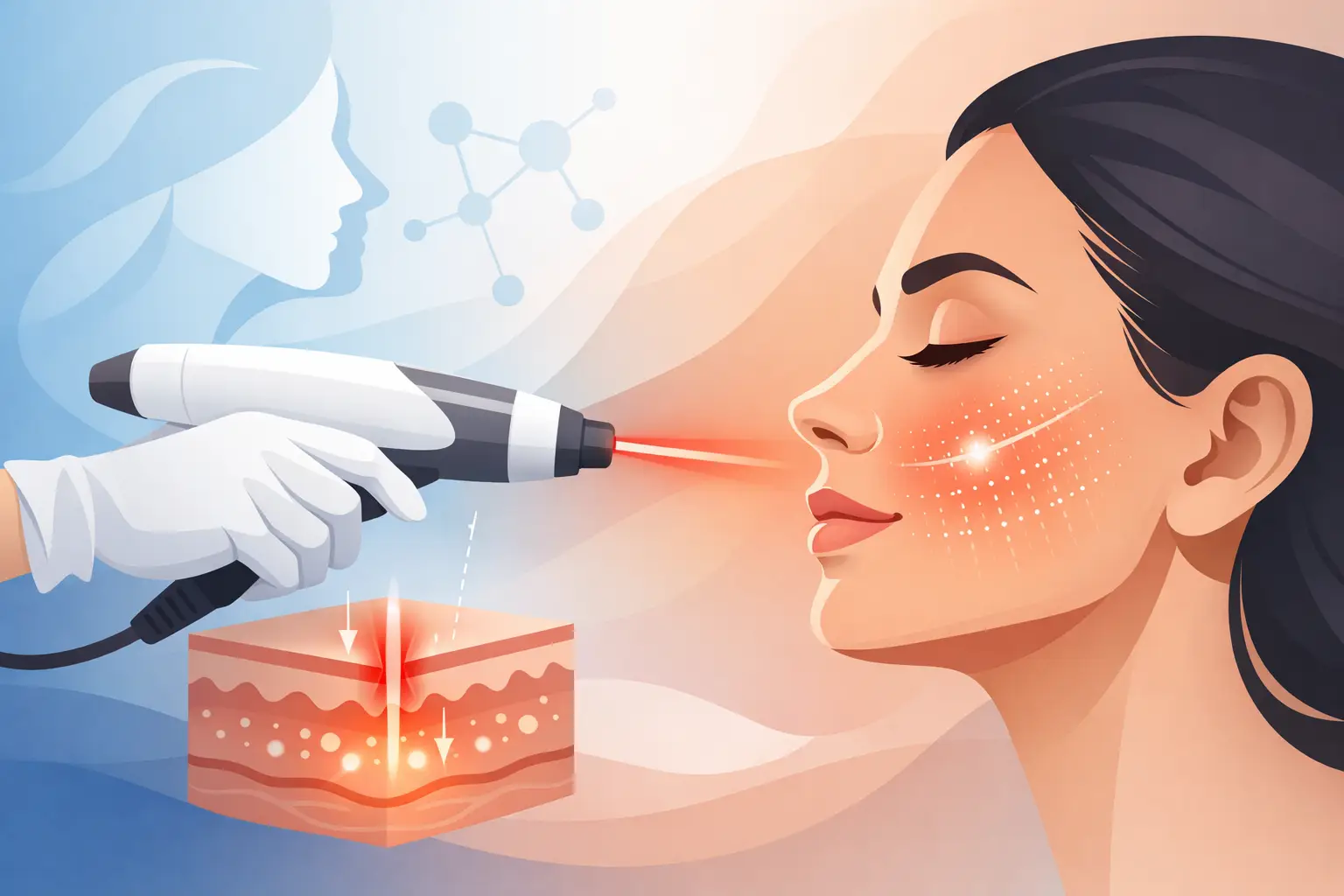
Loose skin can blur an otherwise great result. You may be close to your goal weight, training consistently, and still feel bothered by laxity around the abdomen, arms, thighs, neck, or jawline. That is exactly where junera laser skin tightening stands out – not as a surface-level treatment, but as a targeted way to contract tissue and refine contour from beneath the skin.
For patients who want more definition without committing to a traditional excisional surgery, this technology fills an important gap. It is especially compelling when skin laxity is mild to moderate and the real goal is not just smaller, but tighter, smoother, and more sculpted.
What is junera laser skin tightening?
Junera is a dual-wavelength fiber optic laser system designed for skin tightening and lipolysis. In plain terms, it delivers controlled laser energy under the skin to heat tissue, support contraction, and address pockets of fat when needed. That matters because loose skin and localized fullness often show up together. Treating one without the other can leave a result that feels incomplete.
This is not the same as a relaxing facial at a med spa. Junera is a minimally invasive contouring technology used to improve firmness and shape in areas where skin has started to lose snap. It can be used on the face and body, and it is often considered for the abdomen, upper arms, bra line, flanks, thighs, under the chin, and jawline.
What makes it attractive is the precision. The energy is delivered where it can create meaningful change, rather than relying only on surface heating. For the right candidate, that can translate to visible tightening and cleaner body lines with less downtime than more aggressive surgery.
Why patients ask for Junera instead of surgery
Not everyone with loose skin needs a tummy tuck, arm lift, or neck lift. And not everyone wants scars, longer recovery, or the commitment of a bigger operation. Many patients fall into the middle ground. They have some laxity, but not enough to justify excisional surgery. Or they want to enhance a liposuction result by helping the skin retract more effectively.
That is where Junera earns attention. It is built for patients who want a more refined contour while staying in the minimally invasive category. If your concern is early looseness after weight loss, post-pregnancy tissue changes, age-related laxity, or crepey skin over a treatable area, this may be the kind of upgrade that makes a body contouring plan feel complete.
The trade-off is simple. Junera can produce impressive tightening, but it does not replace surgery when there is significant excess skin. The best results happen when the technology matches the anatomy.
How junera laser skin tightening works in real terms
Laser energy is delivered through a small fiber beneath the skin. That energy heats the tissue in a controlled way, which can stimulate contraction and support collagen remodeling over time. In certain cases, it also helps liquefy fat for easier removal or improved contouring.
The immediate effect patients care about is tightening. The longer-term effect is continued improvement as tissue remodels. That means results can evolve over the weeks and months after treatment rather than appearing all at once.
This is one reason Junera is often paired with liposuction. Fat removal creates the opportunity for shape change. Skin tightening helps the overlying tissue adapt to that new contour. When both are planned together, the final silhouette can look smoother and more intentional.
Where Junera tends to perform best
Some areas respond especially well because the issue is not major skin excess – it is localized laxity that softens the contour. The neck and jawline are a good example. A small amount of looseness under the chin can make the profile look heavier or less defined than it really is. Tightening in that area can sharpen the transition between chin and neck.
On the body, the abdomen is one of the most requested treatment zones. Patients often want better skin contraction after pregnancy, weight fluctuation, or liposuction. The upper arms and inner thighs are also common because these areas can show looseness early, even in fit patients. The bra line and flanks may benefit when mild laxity hides otherwise strong shape.
The key is selection. A technology is only as good as the plan behind it. The best providers do not promise the same result for every body area or every degree of laxity. They assess whether Junera is the right fit, or whether another option will get you closer to your actual goal.
Who is a strong candidate for junera laser skin tightening?
The ideal candidate usually has mild to moderate skin laxity, realistic expectations, and a clear contouring goal. Many are already at or near a stable weight and want to improve definition rather than make a dramatic scale change. Some are post-weight-loss patients who are not ready for larger surgery. Others are men and women who want to tighten a specific area that still looks loose despite a healthy lifestyle.
Good skin quality helps, but Junera is often considered precisely because skin quality is starting to decline. Age alone is not the deciding factor. Tissue behavior, treatment area, and the amount of excess all matter more.
If there is significant hanging skin, a minimally invasive laser approach may not be enough. That is not a flaw in the treatment. It is simply where surgical excision may offer the cleaner result. Honest candidacy matters more than hype.
What treatment and recovery are typically like?
Treatment plans vary by area and whether Junera is being done alone or combined with liposuction. Because it is minimally invasive, there is generally less downtime than with larger surgical lifts. Patients can expect swelling, soreness, and a recovery period that depends on the scope of treatment.
When Junera is paired with liposuction, recovery reflects both parts of the procedure. Compression garments may be recommended, activity may be restricted for a period, and final contour takes time to settle. That timing is worth understanding upfront. Patients who do best are usually the ones who know body sculpting is a process, not an overnight reveal.
A strong treatment experience also depends on technique. Skin tightening is not just about owning the device. It is about knowing how to use energy thoughtfully, how to combine treatments when appropriate, and how to shape a result with precision.
Why provider specialization matters more than the device alone
Patients often search for a technology by name, but devices do not create outcomes by themselves. The real difference comes from judgment, experience, and contouring skill. That is especially true when skin tightening is being used alongside fat removal to improve shape.
In a specialized practice like True Contour Medical, the treatment plan starts with the result, not the gadget. That means looking at the whole area – fat, skin quality, proportions, and how the body moves – then deciding whether Junera belongs in the plan and where it can make the biggest impact. For patients who are serious about body refinement, that level of specialization matters.
A general aesthetic menu may offer many services. A focused contouring practice offers something more valuable – pattern recognition from doing these transformations again and again.
Junera vs other skin tightening options
Some tightening treatments work from the surface. Others work below it. Some are best for texture and early laxity. Others are more appropriate when shape change is part of the goal. Junera sits in a category that appeals to patients who want more than a light refresh but less than a major excisional surgery.
That middle position is its strength. It can do more than many noninvasive treatments, especially when contour is part of the conversation. At the same time, it will not outperform surgery in patients with substantial excess skin. The right comparison is not whether Junera is “better” in the abstract. It is whether it is better for your anatomy, your downtime tolerance, and your desired result.
Patients looking for a snatched waistline, a firmer lower face, or smoother transition after liposuction usually care less about treatment labels and more about whether the result will look tight, balanced, and natural. That is the standard that matters.
What to ask at your consultation
A smart consultation should cover more than the basics. You want to know whether your skin laxity is mild, moderate, or severe, whether Junera alone is enough, and whether combining it with liposuction would improve the result. You should also ask what kind of tightening is realistic for your area, how recovery will fit your schedule, and when you can expect to see the final contour.
Most importantly, ask what the surgeon would recommend if this were their own body. That question tends to cut through generic sales language fast.
If you are frustrated by skin that does not match the work you have already put into your body, junera laser skin tightening may be the missing step between “better” and truly sculpted. The best results come from choosing the right treatment for the right tissue – and choosing a provider who knows exactly how to turn that plan into visible definition.