
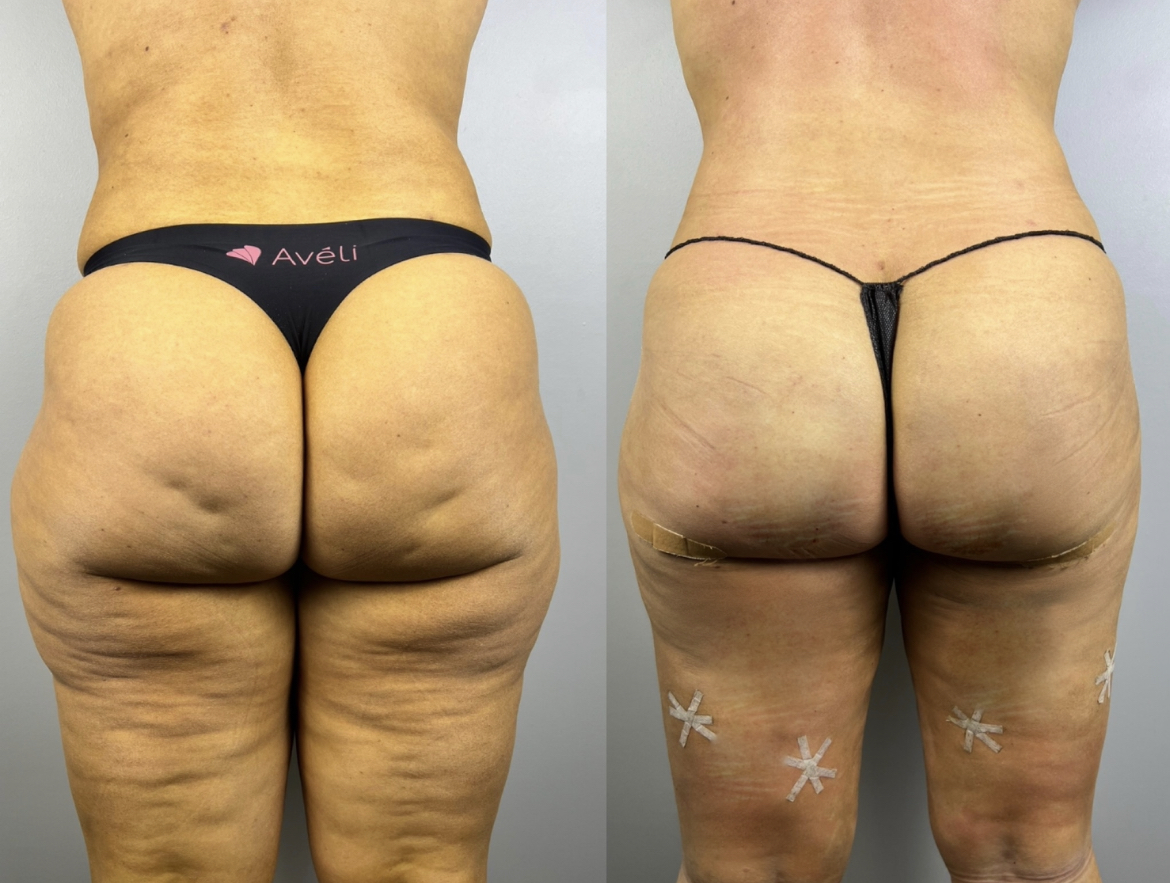
Many women live with leg pain, swelling, or mobility issues and are told the solution is diet and exercise. But in some cases, the real cause is a chronic condition that has a specific and effective treatment: liposuction for lipedema.
This fat disorder is often misdiagnosed or mistaken for obesity, but the way it affects the body is very different. Lipedema often comes with persistent pain in the arms or legs, disproportionate fat in the extremities, and increasing mobility problems.
It’s a condition that is resistant to weight loss and may gradually worsen over time if left untreated. But the good news is that with the right diagnosis, liposuction for lipedema can be an effective solution.
In this article, we’ll explain how to recognize this chronic condition and how liposuction for lipedema can help reduce painful fat, swelling, and improve quality of life.
What is Lipedema?
Lipedema is a chronic medical condition in which an abnormal buildup of fat causes pain, swelling, and mobility issues in specific areas of the body. It most commonly affects the legs, thighs, hips, and sometimes the arms. At True Contour we often talk about liposuction for bodysculpting, but lipedema is a different situation altogether.
In lipedema, fat deposits behave differently from normal body fat. They can affect the small blood vessels and lymphatic structures in the area, leading to swelling, tenderness, and inflammation. It’s also a condition that primarily affects women.
Patients with lipedema often describe the skin as painful to the touch. The texture may feel nodular under the skin, similar to small rice grains or beans, rather than smooth and even like healthy tissue.
What Causes Lipedema? It’s strongly linked to hormonal changes, and can begin during puberty, pregnancy, or menopause. In some cases it appears during the teenage years, but because it is frequently misunderstood, many women live with the condition for years before receiving a proper diagnosis.
According to the Lipedema Foundation, an estimated 400 million women worldwide may be affected, representing roughly 11% of the female population.
So as you can see, it’s more common than many people might think. It may not appear very noticeable at first, and the condition can progress gradually over time.
Stages of Lipedema
- Stage 1 – Tender Sensitivity: The skin appears relatively smooth, but the affected areas feel tender and overly sensitive.
- Stage 2 – Nodular Texture: The skin becomes more uneven as small nodules and firmer fat deposits begin to form.
- Stage 3 – Mobility Limitations: Larger fat pockets become more noticeable and can start affecting mobility and daily activities.
- Stage 4 – Lipo-Lymphedema: This advanced stage involves both lipedema and lymphedema, where the lymphatic system becomes compromised and swelling increases significantly.
Common Symptoms of Lipedema
As we mentioned, one of the biggest challenges with lipedema is that it is often misdiagnosed as regular obesity or dismissed as a simple weight issue. So how can women tell if they may have lipedema? Let’s go over some of the symptoms to watch for:
- Painful fat deposits and swelling
- Skin sensitivity and tenderness
- Easy bruising
- Cold sensations in the affected areas
- Heavy legs that limit mobility
With more than two decades of performing liposuction procedures, I have evaluated and treated many patients with lipedema. Recognizing these signs can be life-changing, because lipedema does have a solution.
Why Liposuction is Used for Lipedema
There are several treatment options for lipedema, including lymphatic drainage massage and compression therapy. But the most effective treatment for lipedema is liposuction, because it allows us to remove that painful fat buildup directly.
The basic liposuction technique is similar to cosmetic procedures: A small cannula is inserted to target and remove fat deposits. However, liposuction for lipedema requires a different treatment strategy.
The first difference is how we plan the treatment. In cosmetic liposuction, we usually focus on specific localized fat pockets. With lipedema, we often treat larger areas, sometimes the entire legs or arms, to remove the abnormal fat tissue more comprehensively.
The second difference is the number of procedures required. Depending on the stage of lipedema, treatment may involve more than one surgery. Many patients need two liposuction sessions spaced a few months apart, while more advanced cases may require three or four procedures.
Finally, the surgical technique is slightly different. Because lipedema affects areas rich in lymphatic vessels, nerves, and delicate tissues, surgeons must work carefully to remove fat while protecting these important structures.
Fortunately, modern liposuction technologies allow us to do exactly that. Let’s look at the techniques most commonly used to treat lipedema.
Types of Liposuction for Lipedema
Most modern liposuction procedures, including those used to treat lipedema, follow a similar basic process:
- First, a tumescent solution is injected to numb the area and prepare the fat for removal.
- Then a small cannula is inserted to break up and remove the abnormal fat deposits.
The procedure is minimally invasive and often performed under local anesthesia, though the exact approach depends on the surgeon’s technique and equipment.
For lipedema treatment, two liposuction techniques are commonly used: Water-Assisted Liposuction (WAL) and Power-Assisted Liposuction (PAL).
Water-assisted Liposuction (WAL)
Water-assisted liposuction uses a gentle stream of fluid to loosen fat cells before removing them. This helps separate the fat from surrounding tissues so it can be removed with less trauma to nerves and lymphatic vessels.
Because of this approach, water-assisted liposuction for lipedema is often used to treat earlier stages of the condition. The technique helps reduce bruising, swelling, and postoperative discomfort.
Power-assisted Liposuction (PAL)
At True Contour Medical, we use Power-Assisted Liposuction (PAL) to treat lipedema, especially in more advanced cases.
PAL uses a cannula that moves in small, controlled vibrations. This mechanical motion allows surgeons to remove fibrous lipedema fat more efficiently while applying less manual force. The result is smoother fat removal and reduced trauma to surrounding tissues.
This technique also allows for excellent precision. Typically, we only need two tiny incisions of about 2 millimeters, placed strategically so scarring is minimal.
Recovery is generally quick. Most patients return to their regular routines within a week, and when additional treatments are needed, the next session can usually be scheduled after two to three months.
Benefits of Liposuction for Lipedema
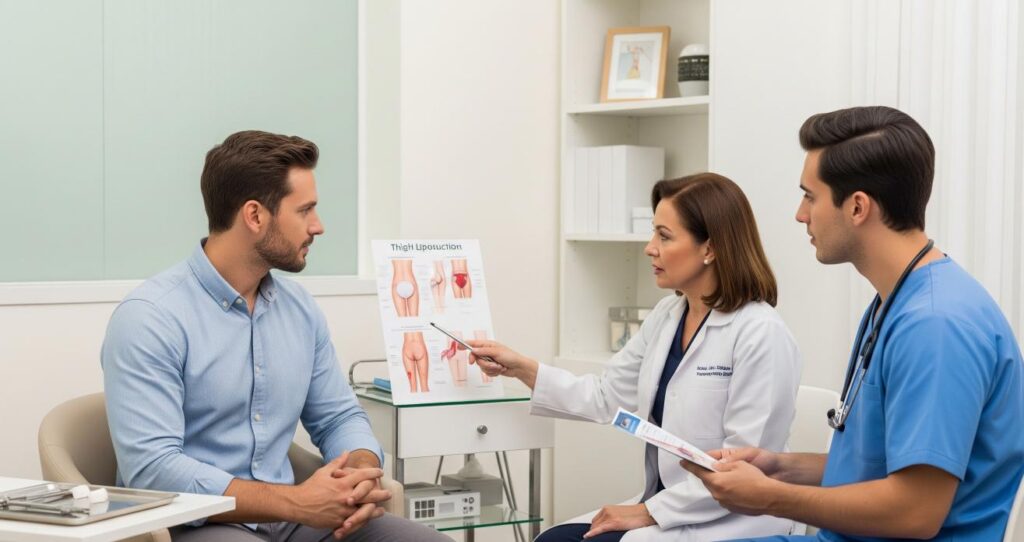
Before we look at the treatment process and the results patients can expect, let’s review how liposuction for lipedema can make a real difference.
- Reduces heaviness and improves mobility: With liposuction we reduce fat volume on legs or arms, which helps relieve the heaviness in the limbs. We have seen patients regain mobility and walk comfortably again after years of struggling.
- Reduces chronic pain: By removing that abnormal fat, we help reduce inflammation and improve circulation, which often leads to significant pain relief.
- Improves skin texture and body symmetry: After lipedema fat removal, patients typically notice a smoother skin texture and a more balanced body contour.
- Improves quality of life: After a liposuction treatment, many patients experience major shift in their daily lives after treatment, as pain decreases and mobility improves. They regain confidence, energy, and the ability to enjoy everyday activities again.
Lipedema Treatment Process
How does lipedema treatment work from start to finish? Let’s walk through the process and what typically happens during a liposuction session.
It all begins with a consultation with the surgeon, which you can schedule here at True Contour Medical. During this conversation, we review your medical history, examine the affected areas, and discuss how we can approach your specific case.
Once we confirm that you are a good candidate, we schedule the procedure. Here is what typically happens on the day of surgery:
- Treatment mapping: We mark the areas where the abnormal fat will be removed and review the procedure plan with you.
- Preparation: You lie comfortably on the procedure table. Because the procedure is done under local anesthesia, patients are awake and we can even keep talking throughout the process.
- Tumescent anesthesia: A tumescent solution is applied to numb the area and prepare the fat for removal.
- Small incisions: Tiny incisions are made so the cannula can be inserted.
- Fat removal: The cannula is used to carefully remove the lipedema fat deposits.
- Closing the incisions: Once the treatment is complete, we close and bandage all the incisions.
The procedure typically lasts two to four hours, depending on the areas being treated. Patients go home the same day and begin their recovery there. Within three to seven days, most patients are past the initial post-operative phase and are well on their way to recovery.
But the treatment doesn’t stop there. Aftercare is an essential part of successful lipedema treatment.
Patients wear medical-grade compression garments to help reduce swelling and support healing. We also recommend lymphatic drainage massages to improve circulation and recovery.
And for those patients who need multiple sessions, we continue monitoring progress and determine the right time for the next treatment.
Recovery & Results
In many cases, the full treatment plan can span six months to a year, depending on the stage of the condition and the areas being treated. And while that timeline may sound long to some, we’re talking about correcting a chronic condition that may have developed over many years. Many women come to us after struggling with lipedema for a long time, sometimes reaching the point where walking or moving comfortably becomes difficult.
But results show up, as treatment progresses. Patients regain mobility, feel healthier, and return to activities they once avoided.
Let’s look at a couple of real cases we treated here at True Contour, so you can better understand the type of recovery and results patients experience.
Treatment for Patient With Lipedema Stage 2
Some time ago, a 74-year-old female patient came to our office seeking treatment for lipedema. She was experiencing significant discomfort, difficulty moving, and noticeable fat buildup in the upper legs.
We treated her with PAL liposuction, and also used Renuvion to gently heat and contract collagen-rich tissue, helping tighten the skin.
Here you can see her before-and-after photos taken just one week after the procedure. Even at this early stage, her legs already felt lighter, with visible improvement in symmetry and smoother contours. Months later, she continues to enjoy improved mobility and renewed confidence.
Treatment for Patient With Lipedema Stage 3
In another case, a patient came to us seeking liposuction treatment for lipedema affecting both her upper and lower legs. Because of the extent of the condition, we scheduled two procedures to properly treat the affected areas.
Here we can see part of her second procedure in the operating room. Using the cannula, I carefully reduced the excess fat volume in the legs while sculpting the area and supporting skin contraction.
Today, she is walking more comfortably and continuing her recovery with excellent progress. Like many of our lipedema patients, she describes feeling lighter, more active, and closer to enjoying life without the limitations she once experienced.
Book a Lipedema Consultation Today
If you feel pain to the touch, bruise easily, or struggle with mobility issues, lipedema could be the reason. Many women spend years being told it’s normal or that they simply need to diet and exercise more. But after decades of experience treating patients, I can tell you this: liposuction for lipedema can truly change lives.
Liposuction targets the root of the condition by removing the abnormal fat deposits that contribute to pain, swelling, and circulation problems. Once that fat is removed, we carefully manage recovery so patients can start feeling lighter, move more comfortably, and finally get relief from chronic symptoms.
If you believe you may be dealing with lipedema, the next step is simple: Let’s talk.Book a consultation with us at True Contour Medical, and we’ll evaluate your condition, answer your questions, and help you determine whether liposuction is the right treatment for you. With the right diagnosis and a clear treatment plan, you can take back control of your health and your life.