
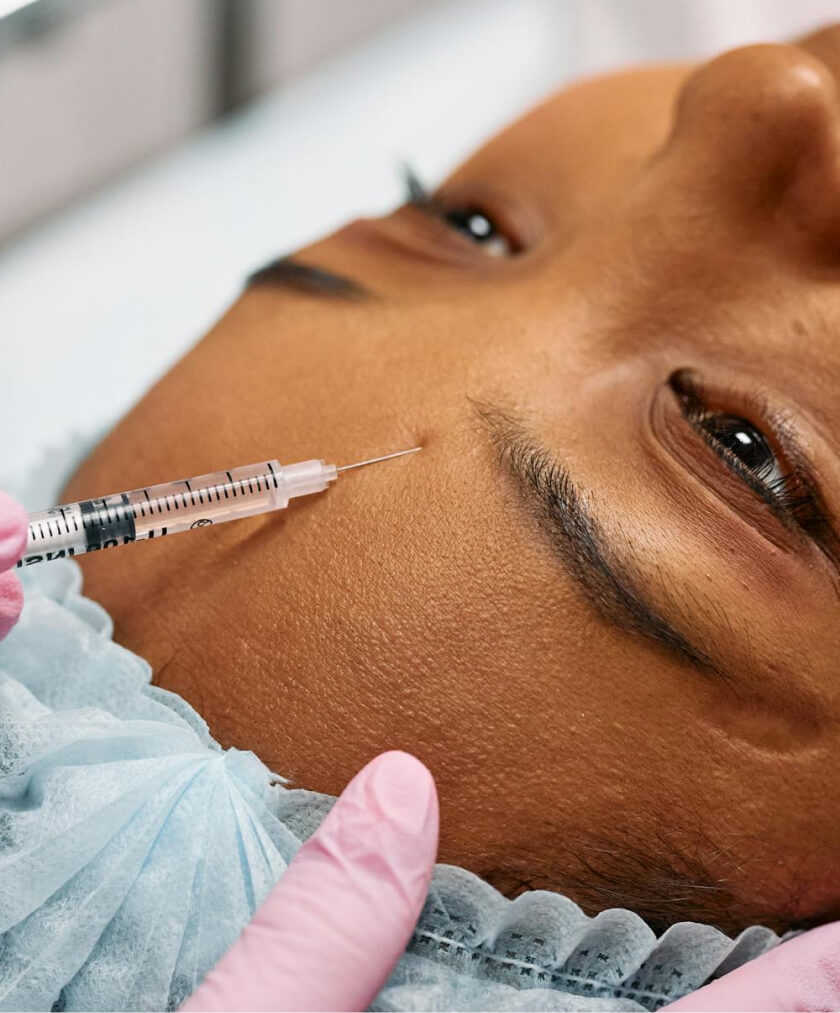
Many athletes choose PRP injections for sports injuries because of a simple reason: better, and often faster, recovery. Not as some magic healing hack people try to sell online, but as a smart, strategic way to come back stronger and perform at a higher level.
You’ve probably heard the basics of Platelet-Rich Plasma therapy. Draw blood, spin it, and inject it into the treatment site. Said like that, it sounds almost too simple. But PRP therapy for sports injuries can support healing in joint conditions like knee osteoarthritis and in tendon injuries such as jumper’s knee. And yes, there is solid science behind PRP, which we’ll break down here.
If you’re an athlete dealing with knee, ankle, hip, or shoulder pain, or someone managing chronic musculoskeletal issues, keep reading. We’re diving into PRP for athletes, how it works inside the body, and what you can realistically expect from this type of regenerative medicine.
What is PRP Therapy?
Today, PRP injections are a widely used treatment in sports medicine, especially for soft tissue and joint injuries. PRP stands for Platelet-Rich Plasma, and it involves taking a small sample of the patient’s own blood, processing it to concentrate the platelets, and reinjecting it into the injured area.
The key behind PRP therapy for sports injuries is that platelets contain growth factors that play an important role in healing. By concentrating and delivering those growth factors directly into damaged tissue, we aim to support tissue repair and potentially improve recovery timelines.
Now, this is not a “get the injection and compete tomorrow” situation. I always explain PRP as a boost to your body’s natural healing response. And the truth is, results vary between athletes. For some knee joint conditions, improvement may begin within 4 to 6 weeks. For tendon injuries in the shoulder or hip, PRP treatment recovery time is often closer to 8 to 12 weeks before the full benefit becomes clear.
That’s why it is important to be realistic, as PRP is not a magic fix for every injury. It works best for specific ligament, tendon, and joint conditions, particularly in the knee, shoulder, hip, and ankle.
That said, if you’re a good candidate, it’s absolutely worth considering. When performed by a qualified professional in a sterile setting, in many cases PRP has shown remarkable benefits, and it’s mostly safe. Because we’re using your own blood, the risk of allergic reaction or rejection is very low.
How PRP Works in the Body
As we explained in our article about PRP vs PRF, the procedure itself can be broken down into three basic steps:
- We draw about 10 to 15 cc of the patient’s blood
- We spin it in a centrifuge to separate the Platelet-Rich Plasma from red blood cells and other components.
- We reinject the concentrated PRP into the treated area, whether that’s the ankle, shoulder, knee, hip, or another injured site.
Depending on how many areas we’re treating, the PRP injection procedure typically takes about 30 minutes.
And for those who don’t like needles at all, let me say we totally take that into account. We make the process as comfortable as possible using precise technique to reach the ligament, tendon, or muscle with minimal discomfort. Apart from being a cosmetic surgeon, I’m also an anesthesiologist, so part of my training is being very good with needles.
As part of the recovery process, if an athlete is actively training when receiving a PRP shot, we usually recommend avoiding high-stress activity for the first few days to allow the area to settle. If the injection was done in a joint, walking and low-impact movement are generally fine. For tendon injuries, we gradually reintroduce strength and loading over the following weeks. PRP therapy for sports injuries works best when paired with smart rehab.
Now let’s talk biology. What’s actually happening inside the body?
When we inject PRP into an injured area, the concentrated growth factors signal the tissue to begin repairing itself. One of the key mechanisms is increased collagen production, which is essential for rebuilding tendons and ligaments.
What platelets do is help the three classic phases:
- Inflammation: PRP helps stimulate a controlled inflammatory response. This is the body’s way of kickstarting the healing process, and not a bad thing at this point.
- Proliferation: New cells begin to form, blood vessels develop, and the tissue starts rebuilding and strengthening.
- Remodeling: Collagen fibers reorganize and mature. Over time, they become stronger and more structured, helping restore stability and function to the injured tendon or ligament.
So how long are we talking?
PRP treatment recovery time depends on the type of injury, the athlete’s age, training load, and previous damage. As we said, for many sports injuries, improvement can begin within 4 to 6 weeks, with continued progress over the following months.
Common Sports Injuries Treated with PRP
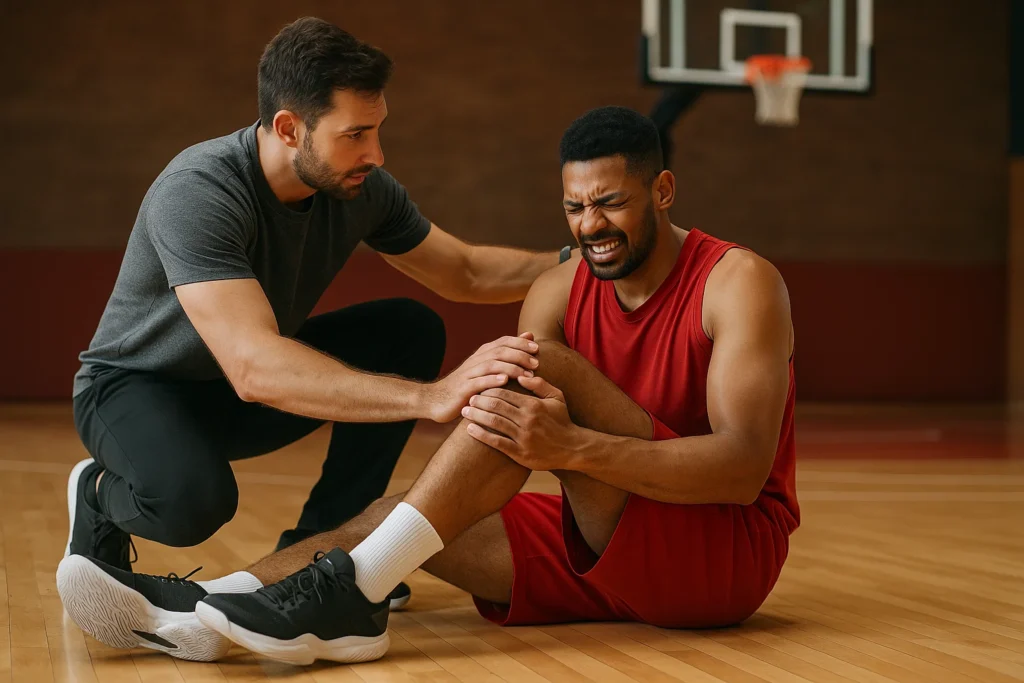
As part of our regenerative medicine approach to sports injury treatment at True Contour Medical, we offer PRP to support healing in soft tissue injuries involving tendons, ligaments, joints, and muscles.
There is a wide variety of conditions we can treat with PRP therapy for sports injuries:
Joint Conditions and Early Arthritis
PRP knee injections are common for athletes dealing with cartilage wear, inflammation, or persistent swelling. We also treat hip, ankle, shoulder, wrist, and even thumb arthritis in active individuals who want to stay active without immediately turning to surgery.
Tendon Injuries (Chronic Tendinopathy)
These are some of the most common issues PRP can help athletes with:
- Patellar tendinopathy, also known as jumper’s knee
- Achilles tendinopathy or partial Achilles tears
- Rotator cuff tendinopathy in the shoulder
- Hip abductor tendinopathy
- Tennis elbow and golfer’s elbow
- Plantar fasciitis or partial plantar fascia tears
Meniscus and Labral Injuries
Certain meniscus tears in the knee and labral tears in the hip or shoulder may benefit from PRP injection therapy, especially when the tear is stable and not fully detached. A carefully placed PRP injection hip treatment, for example, can help reduce inflammation and support tissue repair in select cases.
Ligament Sprains and Partial Tears
Chronic ankle sprains, mild ligament instability, and partial tears may also be candidates for PRP ankle treatment. In many cases, PRP works best alongside physical therapy and structured rehab to strengthen the area and improve long-term tissue quality.
Benefits of PRP for Athletes
By this point, the potential benefits of PRP are clear: better injury management, reduced pain, and often faster recovery. But as much as PRP helps athletes stay in shape throughout the demands of a season, it works best as part of a bigger plan. PRP therapy for sports injuries is typically combined with physical therapy and structured rehab to maximize results.
For joint issues, PRP injections can become part of a long-term recovery strategy. Some athletes use it periodically to manage inflammation and cartilage wear. For example, NBA star Kobe Bryant incorporated PRP into his knee care routine during his career as part of maintaining performance over time.
Tendon injuries are another area where PRP can make a meaningful difference. Chronic overload injuries like Achilles tendinopathy or jumper’s knee are often stubborn and slow to heal. In certain cases, a well-timed PRP shot can help stimulate collagen repair and improve tendon quality over time. Tiger Woods reportedly used PRP as part of his recovery from Achilles tendon issues, integrating it into his broader rehabilitation strategy.
When we break it all down as part of a plan, here is how PRP may help athletes:
- Reduced pain: By supporting tissue repair at the source, PRP may provide longer-term improvement rather than temporary relief.
- Improved mobility: As inflammation decreases and tissue quality improves, joints and tendons often move more smoothly.
- Greater endurance: With less pain and irritation, athletes can train and compete longer without constant setbacks.
- Faster recovery cycles: PRP is increasingly used as part of a seasonal recovery strategy to bounce back from repetitive wear and tear.
- Reduced chronic inflammation: Healthier tissue may mean fewer flare-ups and less recurring breakdown in joints or tendons.
- Improved strength and stability: Especially in tendon injuries, collagen remodeling can help restore resilience and structural support.
But it’s not only about performance, as PRP can also improve quality of life. One of the most valuable benefits I see in my patients is sustained improvement. When inflammation decreases and tissue quality improves, mobility improves as well. That translates into smoother movement, better training sessions, and fewer setbacks over time.
And while we’re focusing on PRP for athletes here, this approach isn’t limited to elite players. Active adults and individuals dealing with chronic musculoskeletal conditions may also benefit, as long as they are appropriate candidates.
We’re often talking about injuries that have been present for months, sometimes years. Issues that may have contributed to compensation patterns, chronic inflammation, or repeated flare-ups. For many people, that’s the real value of PRP. Better, and often faster, recovery that can shift the long-term trajectory of an injury.
PRP doesn’t work the same way for everyone. But for many athletes and active individuals, it has become a trusted tool to support mobility, endurance, strength, and long-term performance.
Schedule Your PRP Consultation Today and Get Back On Track
How do you know if PRP therapy can help your sports injury? You start with a proper evaluation in experienced hands, like ours at True Contour Medical.
Whether it’s knee, shoulder, ankle, or hip pain that has been lingering for months, the first step is understanding exactly what’s going on. During your consultation, we review your symptoms, training routine, and prior treatments. We carefully assess your medical history and, when needed, use imaging to confirm whether you’re a good candidate for PRP treatment.
As Scottsdale’s leading regenerative medicine clinic, our goal is always to select the right patient for the right treatment. If you’re dealing with persistent joint or tendon pain that hasn’t improved with rest or therapy, it may be time to consider a different approach. Schedule your consultation today and let’s find out whether PRP can help optimize your recovery and get you back performing at your best.