
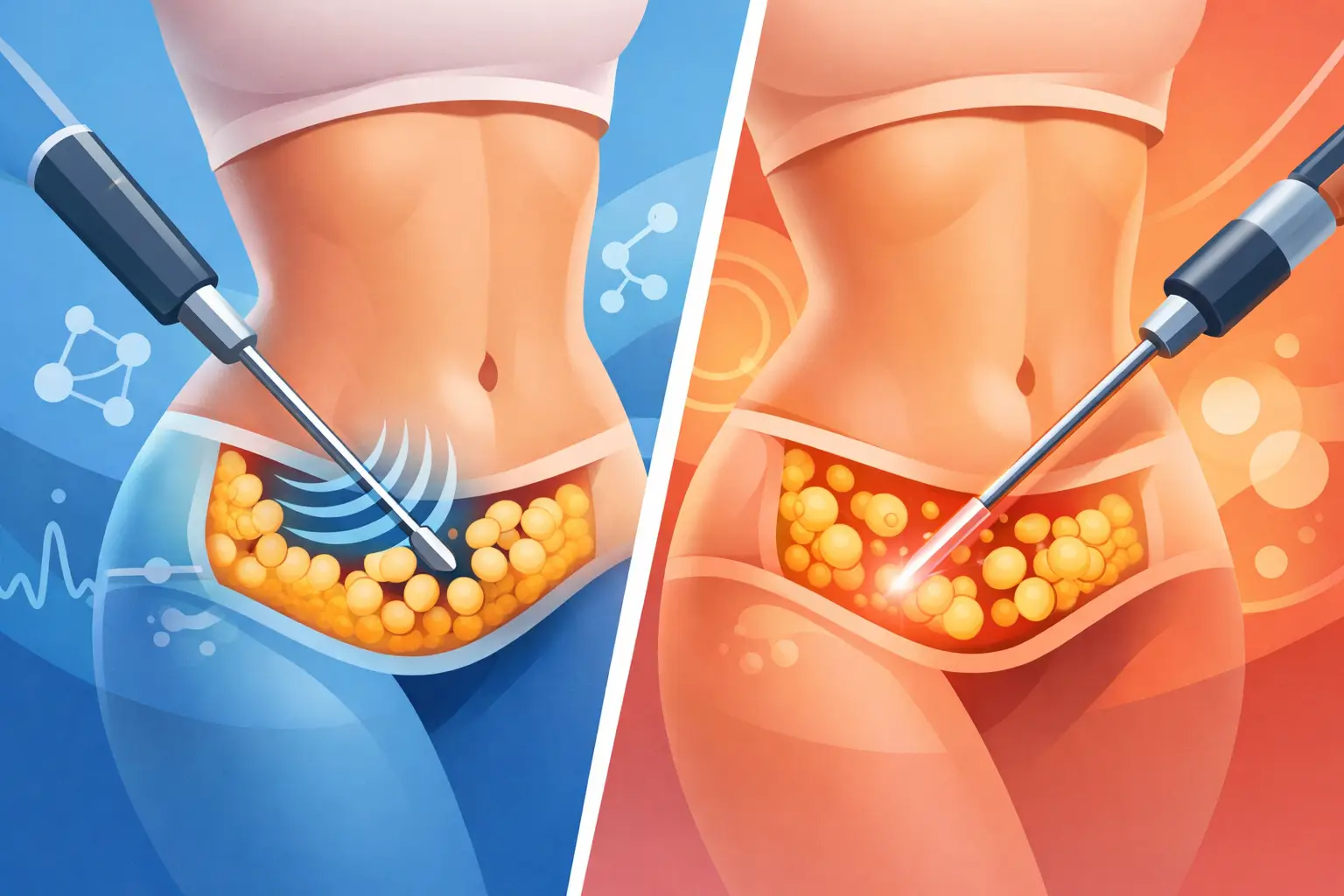
If you are comparing vaser vs laser liposuction, you are already asking the right question. Not all fat removal technology performs the same way, and the tool your provider uses can affect contour, skin response, recovery, and how refined your final result looks.
This is where many patients get stuck. Both treatments are marketed as advanced, minimally invasive options. Both are designed to remove unwanted fat. But they do not behave the same in the operating room, and they are not equally effective for every body type, treatment area, or aesthetic goal.
For patients who want real sculpting, not just general fat reduction, the difference matters.
VASER vs laser liposuction: the real difference
At the highest level, VASER uses ultrasound energy to break apart fat before removal, while laser liposuction uses heat from a laser fiber to liquefy fat and support some degree of skin tightening. That sounds simple enough, but the practical difference is bigger than the marketing language suggests.
VASER is often favored when precision matters. The ultrasound energy helps separate fat from surrounding tissues in a way that can allow for smoother contouring and more controlled fat removal. That makes it especially appealing in areas where definition, symmetry, and sculpted lines are the goal.
Laser liposuction is typically positioned as a less aggressive option with the added benefit of heat-based tissue contraction. In the right patient, that can be useful. But laser-based fat melting is not the same thing as advanced body sculpting, and results can depend heavily on the amount of fat present, the quality of the skin, and the experience of the provider.
How VASER liposuction works
VASER stands for Vibration Amplification of Sound Energy at Resonance. In plain terms, it uses ultrasonic energy to target fat cells while helping preserve surrounding structures such as nerves, blood vessels, and connective tissue.
After the area is infused with fluid, a specialized probe delivers ultrasound energy to emulsify the fat. The fat is then removed through suction. Because the fat is loosened before extraction, the process can be more controlled than traditional liposuction alone.
That control is one reason VASER is widely used for high-definition contouring. It can be effective in the abdomen, waist, back, flanks, chest, arms, and other areas where shape matters as much as volume reduction. For patients who want more visible definition rather than a smaller version of the same shape, that distinction is a big deal.
How laser liposuction works
Laser liposuction uses a thin laser fiber placed under the skin to deliver thermal energy into the fat layer. The heat disrupts fat cells, making them easier to remove or absorb, depending on the technique being used.
One of the main selling points of laser liposuction is heat-induced skin tightening. That can be attractive for patients with mild skin laxity who want a modest improvement while treating smaller pockets of fat. Common areas include the chin, arms, lower abdomen, and other zones where subtle refinement may be the goal.
The trade-off is that heat has to be managed carefully. Too little energy may limit the tightening effect. Too much can increase the risk of burns, prolonged swelling, or irregular healing. In other words, laser technology is not automatically better because it sounds more modern. Outcomes still depend on judgment, technique, and patient selection.
Which one removes fat more effectively?
If the goal is meaningful fat removal with sculpted contouring, VASER often has the edge.
That does not mean laser liposuction cannot reduce fat. It can. But VASER is generally better suited for treating larger areas and creating more dramatic definition. It is often chosen for patients who want a more athletic waistline, a more contoured abdomen, a cleaner jawline, or better transitions between treated and untreated areas.
Laser liposuction can work well when the fat volume is smaller and the patient wants a more conservative change. It may be a fit for someone who needs minor refinement rather than a full body contouring plan.
This is where honest consultation matters. If you need true reshaping, a treatment designed for subtle improvement may leave you underwhelmed.
What about skin tightening?
This is the point where laser liposuction usually gets the most attention. Because it uses heat, it can stimulate collagen and create some skin contraction. For the right patient, especially someone with mild looseness, that can be a real benefit.
But this is also where expectations need to stay grounded. Neither VASER nor laser liposuction should be treated as a substitute for a surgical lift when skin laxity is significant. If you have moderate to severe loose skin after weight loss, pregnancy, or aging, energy-assisted liposuction alone may not deliver the tighter finish you want.
VASER can also support improved skin retraction compared with older liposuction methods, especially when combined with modern skin tightening technology. In a specialized body contouring practice, that is often part of the conversation. The best plan is not always one device. Sometimes it is a strategic combination based on your skin quality, fat distribution, and desired outcome.
Recovery differences patients should know
Both procedures are considered minimally invasive, and both involve swelling, bruising, soreness, and compression garments during recovery. Most patients can return to light activity relatively quickly, but recovery is not identical for everyone.
VASER may cause more early drainage and swelling simply because it is often used for more comprehensive fat removal and more advanced sculpting. That does not mean recovery is worse. It often means the treatment is doing more.
Laser liposuction can appeal to patients looking for smaller-area treatment with a shorter-feeling recovery. But again, the size of the area treated, the amount of fat removed, and whether additional technologies are used can change the experience.
The better question is not which recovery sounds easier on paper. It is which procedure is most likely to get you close to your goal in one well-planned treatment.
VASER vs laser liposuction for different goals
If your main goal is definition, body shaping, and a more customized contour, VASER is often the stronger option. It is especially attractive for the abdomen, flanks, chest, back, and other areas where the final silhouette matters.
If your goal is a smaller correction with mild skin tightening and limited fat reduction, laser liposuction may be worth discussing. It can make sense for a patient with good skin tone, a relatively small treatment area, and realistic expectations.
For post-pregnancy body contouring, male chest reduction, and more advanced waistline sculpting, many patients are better served by a technology built for precision and volume management rather than just heat-based fat disruption.
The provider matters more than the device
This is the part many practices gloss over. Technology matters, but the operator matters more.
A powerful device in inexperienced hands can still produce average results. On the other hand, a specialist who performs body contouring at a high level understands how to evaluate fat layers, skin tone, anatomy, symmetry, and how much removal will create balance rather than flattening. That level of judgment is what turns liposuction into sculpture.
If you are choosing between vaser vs laser liposuction, do not stop at the machine name. Ask what the provider performs most often. Ask which approach they recommend for your body and why. Ask to see results in patients with a build similar to yours. A focused contouring practice will have a clear answer, not a generic pitch.
Which option is better?
For patients who want the most visible transformation, VASER is often the stronger choice. It is built for targeted fat removal, cleaner contouring, and more advanced sculpting. That is why it continues to stand out in practices that specialize in body reshaping rather than offering liposuction as one item on a long menu.
Laser liposuction still has a place. It can be useful for select patients with smaller concerns and mild skin laxity. But if your goal is not just less fat, but a noticeably better shape, the conversation usually shifts toward precision, customization, and how much contour can actually be created.
At a specialized body contouring center like True Contour Medical, that difference is front and center. The right treatment is not the trendiest one. It is the one that matches your anatomy, your goals, and the level of result you expect when you invest in yourself.
If you are serious about changing your shape, not just trimming a little volume, choose the approach that was designed to sculpt with intent.