
This time, I’d like to talk about a chronic condition that’s more common than most people think and often misdiagnosed: lymphedema. Because it can develop silently, many patients live with it for years without realizing it, missing the opportunity for early treatment.
Common signs include persistent swelling, inflammation, and recurring infections. Today, we have effective management options like compression therapy and lymphatic drainage massage. And for patients who don’t respond well to these first-line treatments, lymphedema liposuction can play an important role in improving symptoms.
If you’ve been diagnosed, or these symptoms sound familiar, keep reading. I’ll walk you through what lymphedema is, the treatment options available, and how liposuction can make a meaningful difference when other approaches are not enough.
What Is Lymphedema?
Lymphedema is a chronic condition caused by impaired lymphatic drainage. In simple terms, fluid builds up in specific areas of the body, leading to swelling, heaviness, tightness, and sometimes pain. It most commonly affects the legs, feet, toes, arms, and in some cases, the groin or genital area.
To understand lymphedema, let’s see how it affects the body. Think of the lymphatic system as your body’s waste management network. It’s made up of vessels, lymph nodes, and fluid that help remove excess proteins, toxins, bacteria, and other unwanted substances. When the lymphatic system doesn’t work properly, fluid accumulates, triggering inflammation and chronic swelling.
There are two main types of lymphedema:
- Primary lymphedema is congenital, meaning patients are born with abnormalities in their lymphatic system. It’s less common but can develop over time due to genetic factors.
- Secondary lymphedema is the most common type. It happens when the lymphatic system is damaged, often after surgery, lymph node removal, radiation therapy, infection, or trauma. When that drainage pathway is disrupted, the body can’t clear fluid effectively, and swelling begins to develop.
Regardless of the type, lymphedema symptoms tend to progress gradually. Patients often notice persistent swelling, discomfort, inflammation, and sometimes recurrent infections.
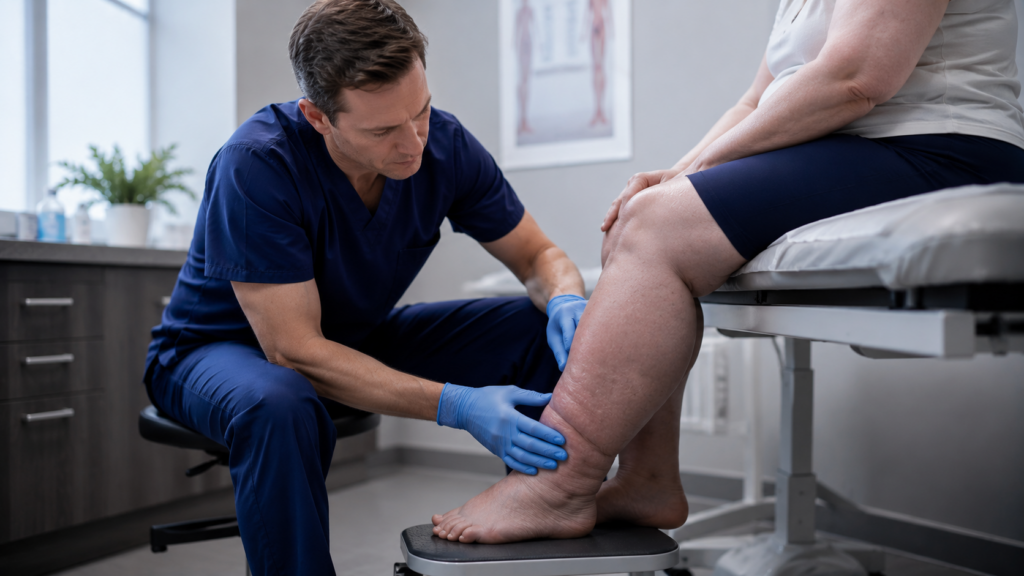
The skin is usually where lymphedema becomes more visible. Over time, it can become thicker, tighter, and less elastic. The affected area may look swollen, feel heavy, and even change shape. It’s not uncommon to see one limb noticeably larger than the other.
Without proper management, lymphedema can worsen, leading to reduced mobility, increased heaviness, and a significant impact on quality of life. In fact, it’s estimated that 3 to 5 million people in the United States are living with lymphedema, many of them undiagnosed because it’s often mistaken for a simple circulation issue.
How can we diagnose lymphedema? One clinical test we use is the Stemmer sign: If you try to gently pinch and lift the skin at the base of the second toe and can’t lift it, that’s considered a positive sign for lymphedema.
Treating Lymphedema
While there’s no definitive cure, there are effective lymphedema treatment options that help manage the condition and improve daily function. First-line treatments typically include:
- Compression therapy: Medical-grade garments or bandaging to maintain pressure and reduce fluid buildup
- Manual lymphatic drainage: A gentle, specialized lymphatic massage that helps redirect lymph fluid
- Skin care: Daily hygiene and moisturization to prevent infections and maintain skin integrity
- Elevation: Helping reduce fluid accumulation, especially in the legs
- Exercise: Low-impact movement like walking, swimming, or stretching to stimulate lymph flow
- Anti-inflammatory diet: Supporting overall health and reducing inflammation through proper nutrition
For many patients, these approaches work well. But in more advanced cases, especially when chronic swelling becomes more fibrotic and resistant, we need to consider additional solutions.
That’s where procedures like lymphedema liposuction come into play. Let me walk you through how that works next.
What Is Lymphedema Liposuction?
Lymphedema liposuction is a specialized liposuction procedure used to reduce excess fat and fibrotic tissue that can build up in an affected limb after long-standing lymphedema. It is not a cure for this condition, and it does not replace compression therapy. But, that said, when first-line treatments don’t work, liposuction can help suitable patients.
Lymphedema liposuction is a minimally invasive procedure, that works the following way:
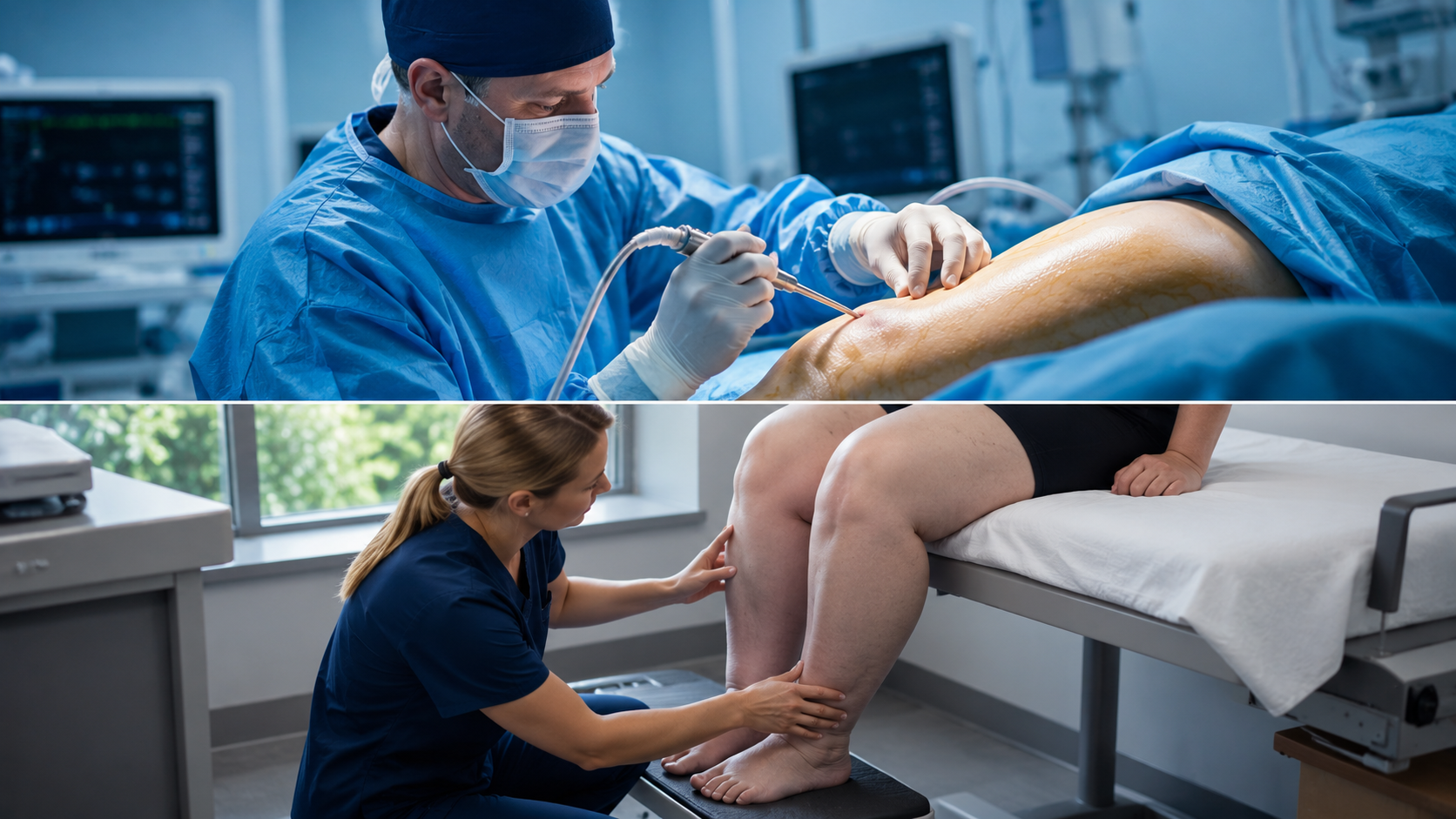
We make small incisions in the treatment area and use thin cannulas to carefully remove the excess tissue contributing to limb volume, heaviness, and discomfort. We do that to help reduce chronic swelling, improve limb size, and make long-term management easier.
And I understand the hesitation. If you developed lymphedema after surgery, lymph node removal, radiation, or recurring infections, the idea of another procedure can feel intimidating. The natural question is: “Could this make things worse?”
That’s why technique and patient selection matter so much. When performed properly, liposuction for lymphedema swelling can reduce limb volume and improve quality of life, especially when combined with continued compression therapy. Current research supports liposuction-based treatment as an effective option for reducing limb volume in selected lymphedema patients.
We’ve also discussed how liposuction can help patients with lipedema, which is different from lymphedema, although the names sound similar. Lipedema involves abnormal fat buildup, usually in the legs and arms. In more advanced stages, lipedema can place extra stress on the lymphatic system and may progress into lipo-lymphedema.
Con lymphedema liposuction, we take extra care to work with the natural direction of the lymphatic pathways, protect the surrounding tissue, and remove the stubborn fat and fibrotic tissue as safely as possible.
Lymphedema Liposuction Procedure
First, we evaluate the affected area, the severity of swelling, skin quality, medical history, and how well you’ve responded to conservative treatment. This helps us determine whether lymphatic liposuction surgery is the right option.
Then, during the procedure, we use tumescent fluid to help numb the area, reduce bleeding, and make fat removal gentler. Depending on the patient’s case, we use VASER and power-assisted liposuction to help loosen and remove fibrotic tissue with more precision.
The key is careful technique. At True Contour, we’ve performed over 2,000 liposuction procedures, and as a board-certified cosmetic surgeon, we approach lymphedema cases with precision, experience, and respect that patients deserve. Every step matters, especially when we’re working around already compromised drainage pathways.
After the procedure, you’ll continue with compression therapy to maintain your results and support your lymphatic system. Liposuction is part of a comprehensive, long-term approach to managing lymphedema and improving your quality of life.
Benefits of Lymphedema Liposuction
Patients who live with lymphedema deal with pain, swelling, and that constant feeling of not being fully comfortable in their own body. It’s a condition that affects quality of life. And while it requires a comprehensive approach, liposuction can make a real difference.
It works as part of a treatment plan that includes compression therapy, garments, and healthy habits. But when we add the right procedure, the improvement can be significant.
This is how liposuction for lymphedema swelling can help:
- Enhances lymphatic function: Follow-up imaging (ICG lymphography) shows improved drainage patterns
- Reduces limb size: Decreases the size and circumference of affected arms or legs, helping restore a more balanced shape
- Less pain and discomfort: Removes the stubborn fat and fibrotic tissue that build up over time
- Supports lymphatic activity: In some cases, lymphatic pathways function more effectively after treatment
- Lower infection risk: Less stagnant fluid and healthier skin reduce the chances of cellulitis
- Better mobility: A lighter, less stiff limb makes daily movement easier
Recovery and Results
Many patients see ongoing progress beyond six months, with continued benefits even up to one to two years. It’s important that after the liposuction procedure, patients stay consistent with compression therapy and proper follow-up care. Those patients who commit, are likely to notice improvements early on, and continue to improve over the following months.
Who Is a Good Candidate?
Not every patient with lymphedema needs liposuction, and that’s important to understand. In our practice, we take the time to evaluate your symptoms, your medical history, and how your body has responded to conservative treatments before recommending anything.
That said, good candidates for lymphedema liposuction typically include:
- Patients with advanced lymphedema, where swelling has become more fibrotic and persistent
- Those who haven’t seen enough improvement with compression therapy, lymphatic drainage, and other conservative treatments
- Individuals who are committed to wearing compression garments after the procedure and following long-term care recommendations
As for who may not need this treatment, it’s usually not recommended for patients in the early stages of lymphedema, where non-surgical options are still effective.
At the end of the day, early diagnosis and prevention make the biggest difference. If you’re experiencing chronic swelling, or you’ve had surgery or treatment that led to these symptoms, it’s worth getting evaluated by your primary care provider, or a specialized clinic like us, True Contour Medical.
Advanced Care for Lymphedema Starts Here
Living with lymphedema can feel frustrating, especially when swelling and discomfort don’t improve the way you expect. The good news is that with the right approach, you can take back control of your symptoms and your quality of life.
As part of a comprehensive treatment plan, lymphedema liposuction offers a proven option for reducing chronic swelling, especially in more advanced cases.
At True Contour, we bring years of experience in liposuction, from cosmetic procedures to treating conditions like lipedema and lymphedema. We approach every case with precision, care, and the level of attention every patient deserves.
If you’re dealing with persistent swelling or feel like your current treatment isn’t enough, it may be time to explore your options. Schedule a consultation with us, and we’ll take a close look at your case, answer your questions, and guide you toward the best path forward.